Custom Business Systems: Why Companies Are Replacing Their SaaS Stack With One Platform They Own
Businesses are spending thousands per year on disconnected software subscriptions. Custom-built business systems consolidate everything into one platform with one login, lower overhead, and full ownership. Here is why the shift is happening now.
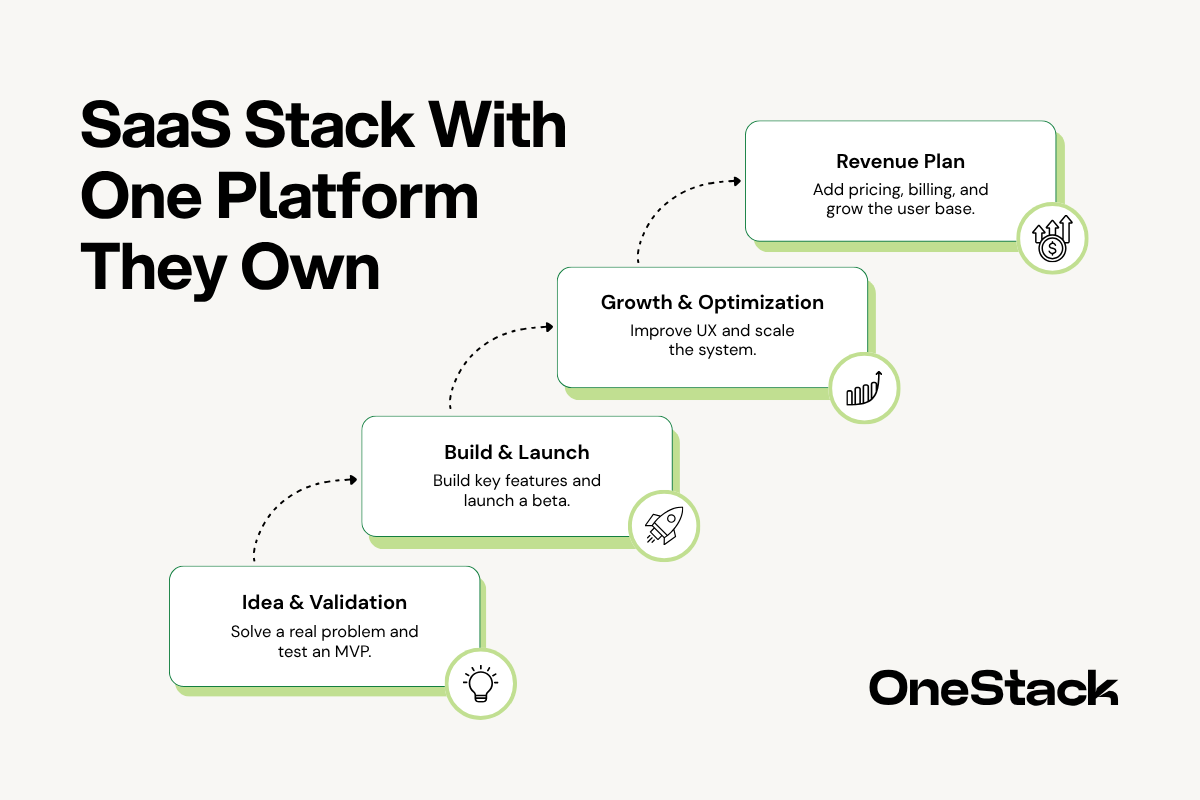
Every business that operates online uses software. That is not new. What is new is the realization that the software model most businesses rely on is fundamentally broken.
The average small-to-midsize business subscribes to between eight and fifteen separate software platforms to manage daily operations. One for customer relationships. One for scheduling. One for invoicing. One for email marketing. One for project management. One for client communication. One for analytics. One for automation. Each platform requires its own login, its own monthly payment, its own learning curve, and its own set of limitations.
None of them were designed to work together. And that is where the real cost lives.
The Hidden Cost of a Disconnected Tech Stack
The visible cost is the monthly bill. Add up every software subscription running your business right now, and most operators land somewhere between five hundred and two thousand dollars per month. Over a year, that is six thousand to twenty-four thousand dollars. Over three years, it compounds into a number most business owners have never calculated.
But the monthly bill is not the real problem.
The real problem is what happens between the tools. A lead comes in through your website form. Someone copies it into the CRM manually. A booking gets scheduled in one platform, but the invoicing tool does not know about it. An email campaign goes out, but the results live in a dashboard that is disconnected from your sales pipeline. A client asks for a status update, and the answer requires logging into three different platforms to piece it together.
This space between the tools is where time disappears. It is where errors multiply. It is where businesses hire additional staff not to grow the business, but to manage the gaps between platforms that were never built to communicate with each other.
What a Custom Business System Actually Means
A custom business system is a single platform built specifically for how one business operates. Not a template. Not a pre-built tool with a thousand features designed for a million users. One system, designed for one business, that handles everything that business needs to run.
Customer relationship management. Appointment scheduling and booking. Invoicing and payment collection. Email communication and automation. Client portals where customers can log in, view project status, approve deliverables, and manage their account. Internal dashboards where the business owner and team see everything in one place without switching tabs.
One login. One platform. One source of truth for every piece of data the business generates.
The difference between this and subscribing to ten separate tools is not just convenience. It is structural. When every function of the business runs on the same system, data flows automatically between processes. A new client books a call, the system creates their profile, sends a confirmation, generates an onboarding sequence, prepares an invoice, and updates the dashboard. No manual entry. No middleware. No employee managing the handoff between disconnected platforms.
Why Businesses Are Making the Switch Now
Three things have changed in the last two years that make custom business systems more accessible and more necessary than they have ever been.
First, the cost of building custom software has dropped significantly. Advances in development frameworks, component libraries, and AI-assisted coding mean that a system that would have taken six months and six figures to build five years ago can now be delivered in thirty days at a fraction of the cost. The technology barrier that once made custom systems a luxury for enterprise companies has largely dissolved.
Second, the SaaS subscription model has reached a tipping point. What started as affordable, single-purpose tools has become a sprawling ecosystem of overlapping platforms that collectively cost more than a custom-built alternative. Business owners are doing the math and realizing that three years of subscription payments exceed the one-time investment in a system they would own outright.
Third, businesses are beginning to understand the difference between renting infrastructure and owning it. A subscription-based tool is someone else's product. The code belongs to them. The data lives on their servers. The features evolve according to their roadmap, not yours. The pricing changes at their discretion. A custom-built system is an asset. The code belongs to the business. The data stays under their control. The features are exactly what the business needs, nothing more, nothing less. And there are no recurring fees.
The Operational Advantage of One Platform
Operational efficiency is not about working harder or moving faster. It is about removing the friction that slows a business down without the business even realizing it.
Consider the daily workflow of a typical service business running on multiple platforms. The owner checks one tool for new leads, another for today's schedule, a third for outstanding invoices, a fourth for email campaign performance, and a fifth for team task assignments. Each tool has its own notification system, its own data format, its own interface. Context-switching between these platforms takes time, creates cognitive load, and introduces opportunities for things to fall through the cracks.
Now consider the same workflow on a single platform. The owner opens one dashboard. New leads are listed alongside today's schedule. Outstanding invoices are visible next to the client profiles they belong to. Email performance metrics sit beside the campaigns themselves. Team assignments and project status are accessible without navigating away. Everything the business needs to make decisions is visible in one view.
This is not a marginal improvement. It is a fundamentally different operating model. The business moves faster because there is less friction. Decisions happen sooner because the information is already consolidated. Errors decrease because data does not need to be manually transferred between systems. And the owner spends less time managing software and more time managing the business.
What Business Owners Get Wrong About Custom Systems
The most common misconception is that custom-built means complex. Business owners hear "custom software" and imagine a massive engineering project with months of development, constant maintenance, and a team of developers on retainer.
The reality for most small-to-midsize businesses is far simpler. A custom business system is not an enterprise software deployment. It is a focused, purpose-built platform that handles the specific functions the business actually uses. Most businesses need fewer than ten core capabilities. CRM, scheduling, invoicing, email, a client portal, basic automation, and a reporting dashboard. Building these into one integrated system is a well-defined scope with predictable timelines and outcomes.
The second misconception is that the business will be dependent on the developer who builds it. Properly built custom systems use standard, well-documented technologies. The codebase is clean, the architecture is straightforward, and any qualified developer can maintain, modify, or extend it. The business owns the code, the data, and the infrastructure. There is no vendor lock-in because there is no vendor. The system belongs to the business.
The Financial Case for Ownership
The financial argument for custom business systems is straightforward once the numbers are visible.
A business spending eight hundred dollars per month on software subscriptions will spend nine thousand six hundred dollars per year and nearly twenty-nine thousand dollars over three years. At the end of those three years, the business owns nothing. The moment the payments stop, the tools stop working.
A custom-built system is a one-time investment. After the build is complete and the system is deployed, there are no monthly subscription fees. No per-seat charges. No annual price increases. The business can optionally invest in ongoing maintenance and support, but the system itself continues to operate whether or not the business pays anyone anything.
Over a three-year horizon, most businesses that switch from a subscription stack to a custom system save thousands of dollars. But the savings are secondary to the asset. A proprietary business system increases the operational value of the company. It signals infrastructure maturity to investors, partners, and potential acquirers. It creates a competitive advantage that cannot be replicated by competitors using off-the-shelf tools.
Who This Is For
Custom business systems are not for every business at every stage. A brand-new startup with no revenue and no established processes is better served by free or low-cost tools that help them find product-market fit.
But a business that has found its footing, that has clients, revenue, and established workflows, that is paying for multiple software subscriptions and feeling the friction of disconnected tools, that is the business that benefits most from consolidation.
Service businesses. Agencies. Consultancies. Healthcare practices. Real estate operations. E-commerce brands with operational complexity. Any business where the owner has looked at their monthly software spend and thought, "There has to be a better way."
There is.
The Shift Is Happening
The subscription software era solved a real problem. It democratized access to professional tools that previously required enterprise budgets to build. But the model has run its course for businesses that have outgrown it.
The next era of business technology is not about finding better tools. It is about owning the infrastructure. Building systems that fit the business instead of forcing the business to fit the system. Consolidating ten platforms into one. Replacing ten logins with one dashboard. Turning a monthly expense into a permanent asset.
Custom business systems are not a trend. They are a correction. The market is moving from renting to owning, from subscribing to building, from dependency to control. And the businesses that make this shift now will operate with structural advantages that compound every month their competitors continue to rent.
The question is not whether this shift will happen. It is whether your business will lead it or follow it.
Keep Reading
For a deeper look at why the subscription model is losing its grip on growing companies, see our article on Why the SaaS Model Is Failing Growing Businesses at /news/why-saas-is-dead. You can also read Own Your Infrastructure: Why Proprietary Systems Increase Business Value at /news/own-your-infrastructure for the financial case behind ownership, or explore the real math behind subscription spending in Stop the Subscription Bleed: The True Cost of Your Software Stack at /news/stop-the-subscription-bleed.